

A long sleeve drop waist dress moves the waist seam from your natural waist down to your hips, trading the classic cinched silhouette for a longer, more relaxed line through the torso. That one construction change is why the style feels so different from every other dress in your closet — and why the fabric it’s cut from matters more than usual. The drop waist lives or dies on how the skirt falls from that lowered seam, and drape is a fabric property before it’s a design one. Here’s how to read both, so the next drop waist dress you pick up looks the way it did in your head.
What Is A Drop Waist Dress, Exactly?
A drop waist dress is any dress whose waist seam sits below the natural waist — usually at the high hip — so the bodice runs long and the skirt starts lower than expected. The style traces back to the 1920s flapper silhouette, and it’s having a genuine revival right now: fitted through the top, released through the skirt, with none of the waist pressure a cinched dress puts on you through a long day. The long-sleeve version adds coverage and polish, which is what makes it work past summer — it reads finished on its own, no cardigan required.
Who Does The Drop Waist Flatter?
The honest answer: it depends less on your body type than on the version you choose. The lowered seam elongates the torso, which is a gift if you’re long-legged or straight through the middle — and a thing to manage if you’re petite or short-waisted, since the seam can visually shorten the leg. The fixes are simple: a drop waist that sits at the high hip rather than the low hip, a hem at or above the knee, and a shoe with a little height all restore the proportion. If you love the style, there’s a cut that works — it’s a matter of where the seam lands, not whether you’re “allowed” the silhouette.

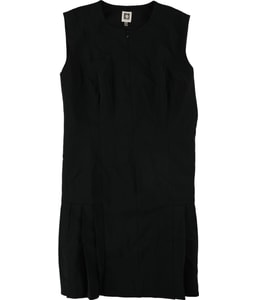
A structured jacquard like this one shows what a firmer fabric does for the style: the skirt holds its shape from the dropped seam instead of collapsing against the hip, and the woven-in pattern gives the long bodice something to do visually. Fabrics with body — jacquard, ponte, heavier cotton — are the pick when you want the drop waist to read polished and architectural rather than slouchy.
The Fabric Decides The Dress
Every drop waist dress makes one of two moves at the seam: the skirt either flows from it or stands away from it. Which one you get is almost entirely the fabric’s call.
Cotton is the everyday backbone — breathable, soft, and easy to care for. Lighter cottons flow; heavier ones add structure. The tradeoff is wrinkling, so a quick steam before wear is part of the deal. Rayon drapes more fluidly than almost anything at its price, which makes it the choice when you want the skirt to move — the classic swishy, feminine version of the style. Linen brings the best breathability of the group and a relaxed, textural drape that suits daytime and warm weather; it wrinkles openly and wears that as character. Satin turns the same silhouette into an evening piece — the light-catching finish plus the elongated bodice is a genuinely glamorous combination — at the cost of more delicate care. Chiffon is the airiest option, usually layered over a slip lining, and it gives the drop waist an ethereal quality the heavier fabrics can’t.
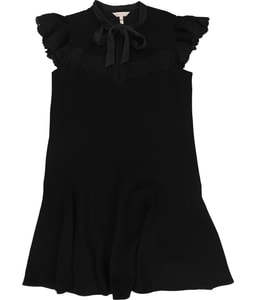
On the fluid end of that spectrum, a soft black drop waist like this one drapes from the seam instead of standing away from it — the skirt swings when you walk, and the long-sleeve bodice keeps the whole look sleek enough for dinner. This is the version to choose when “relaxed but elegant” is the brief.
A quick fabric test in the fitting room: pinch the skirt and lift it a few inches, then let go. If it floats back down, you have drape; if it falls in a single stiff piece, you have structure. Neither is wrong — they’re just two different dresses.

Matching Fabric To Occasion
Once you’ve felt the difference, matching fabric to occasion gets fast. Cotton and linen own daytime — errands, brunch, the office on a casual day — with flats or low boots keeping the line long. Rayon covers the in-between: fluid enough for an evening out, easy enough for daily wear. Satin and chiffon are the event fabrics; add heels and one strong earring and the elongated bodice does the rest. And in cooler months, the long-sleeve drop waist earns its keep as a layering base — tights and ankle boots below, a cropped jacket above, ending at or near the dropped seam so the waistline stays legible. A long coat works too, as long as it’s open or belted higher than the dress’s own seam.
Drop Waist Questions, Answered
Is the drop waist dress still in style?
Yes — it’s one of the strongest dress silhouettes going right now, showing up from designer runways to every major retailer. Like the blazer or the slip dress, it has moved from trend to recurring wardrobe category, so a well-made one won’t date on you.
Is a drop waist unflattering on petite frames?
Not inherently — the risk is a seam that sits too low and shortens the visible leg. Petite frames do best with a high-hip drop, a shorter hem, and a pointed or heeled shoe. Get those three right and the elongated torso reads elegant, not stunted.
What shoes work with a drop waist dress?
Anything that keeps the leg line going: ballet flats, loafers, or ankle boots for day, a pointed heel for evening. Avoid shoes that cut hard across the ankle if the hem is long — the dress already lowers the visual waist, so you want the leg reading as one continuous line below it.
Finding Yours
Start with how you want the skirt to behave — structured or fluid — and let that pick the fabric before you fall for a print. Our women’s drop waist dresses put the silhouette in one place so you can compare fabrics side by side, and the wider women’s dresses range is there when you want to weigh the drop waist against its cinched cousins. Feel the fabric, check where the seam lands on you, and the rest of the styling takes care of itself.