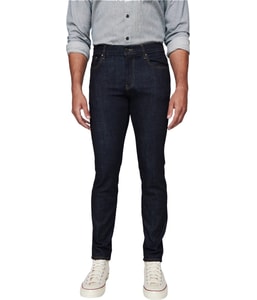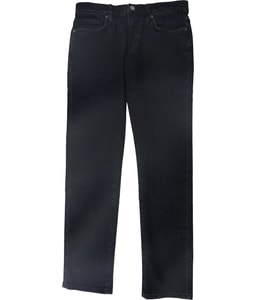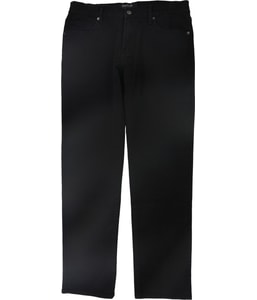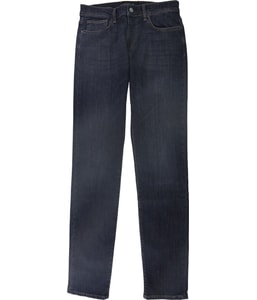


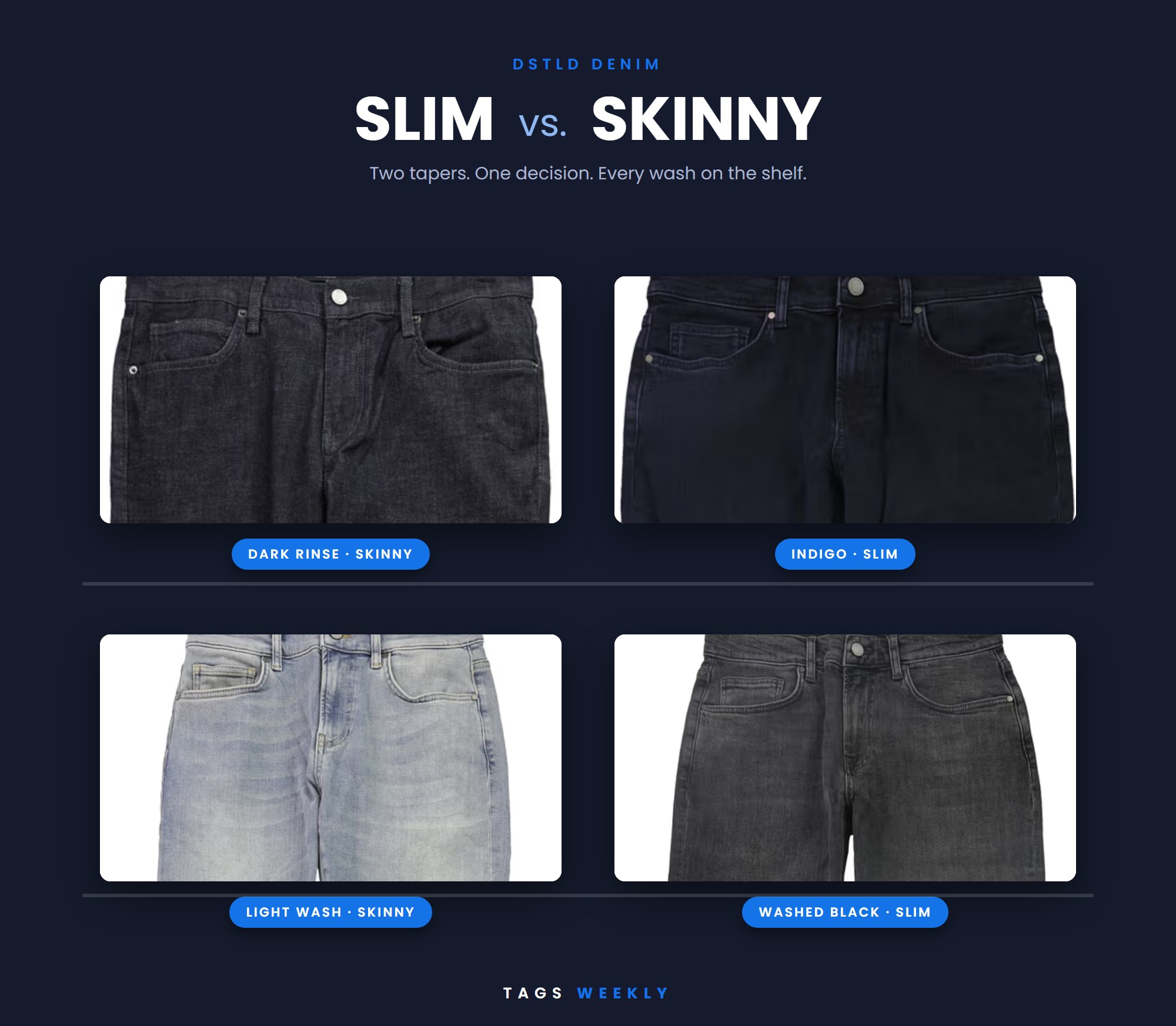
Slim fit and skinny fit jeans get confused constantly, and the difference decides how the whole outfit reads. Slim fit jeans follow the leg with a little air between fabric and skin; skinny jeans hug it all the way down. DSTLD — the LA denim label built on clean, logo-free five-pocket jeans — cuts both, which makes it a useful lens for choosing the fit that actually suits how you dress.
Slim Fit Vs. Skinny Jeans: The Difference At A Glance
| Slim Fit | Skinny Fit | |
|---|---|---|
| Cut | Close through thigh, tapers with room to spare | Tight from thigh to ankle |
| Leg opening | Narrow but stands off the ankle | Grips the ankle |
| Reads as | Tailored, versatile | Sharp, fashion-forward |
| Stretch needed | Optional | Practically required |
| Best with | Almost any shoe and shirt | Low-profile sneakers, boots, fitted tops |
The Taper Is The Tell
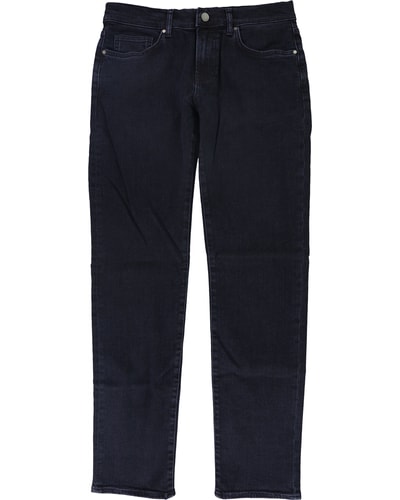
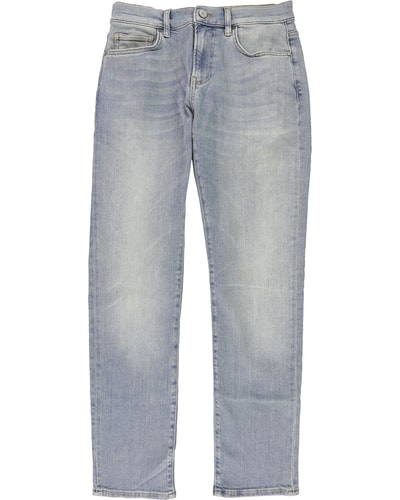
Both fits narrow toward the ankle — what separates them is how much fabric is left when they get there. Lay a pair flat and look at the knee and the leg opening: a slim fit keeps a straight, tailored line you could slide a hand into; a skinny fit collapses to the leg’s own outline. That’s also why the two fits stack differently over shoes — slim jeans break once and sit clean on a sneaker or boot, while skinny jeans either bunch at the ankle or get cuffed. Neither is wrong; they’re two different silhouettes wearing the same wash.
Which Fit Suits Your Build?
- Athletic thighs: slim fit, no contest — a skinny cut fights muscular legs at the thigh and knee. Look for a slim with a touch of stretch and let the taper do the shaping below the knee.
- Lean frame: both work; skinny jeans give a lean build definition instead of swallowing it, which is why they remain the default for slighter frames.
- Broader build: slim reads proportionate where skinny exaggerates; a dark, even wash keeps the line long.
- Undecided: a tapered slim — roomy seat and thigh, skinny-adjacent ankle — is the in-between cut, and it’s the shape DSTLD builds most of its line around.
Do Skinny Jeans Need Stretch?
Realistically, yes. A skinny cut in rigid 100% cotton denim restricts sitting, driving, and stairs — a small dose of elastane (1–2%) is what makes the fit wearable all day while the cotton keeps the structure. Slim fits are more forgiving: rigid denim works because the cut leaves room to move, and rigid fabric ages into the fades denim people chase. Check the fabric tag before you decide the fit is the problem — a “too tight” skinny is often just a stretch-free one.
Styling Each Fit
Slim fit is the everyday answer: it dresses up under an Oxford or blazer and down with a tee, and it takes every shoe from loafers to running sneakers. Dark rinse and black washes read the most polished. Skinny fit wants balance up top — a fitted tee, henley, or slim jacket keeps proportions sharp, while oversized tops over skinny jeans create the lollipop effect. Keep skinny hems clean over low-profile sneakers or tucked into boots. With either fit, the off-price move is owning two washes — one dark for polish, one faded for weekends — instead of one pair that has to do everything.
Why DSTLD Is A Smart Test Case
DSTLD built its reputation on direct-to-consumer denim with no visible branding — clean five-pocket styling, considered washes, and fits cut with modern tapers. That minimalism means the fit is the whole story: a DSTLD tapered slim and a tapered skinny in the same rinse differ only in silhouette, which makes comparing them the clearest way to learn which line flatters you. At off-price, trying both is a realistic experiment rather than an investment decision.
Fit Checkpoints, Whichever You Choose
Both fits are judged at the same four points. The waistband should close without a belt doing structural work — jeans stretch about half a size with wear, so snug-but-closable is right on day one. The seat should skim: pulling or pocket-gaping means size up, bagging means size down. At the knee, a slim fit should pinch about an inch of loose fabric, a skinny fit almost none. And at the hem, the jean should meet the shoe with one soft break or a clean crop — a pile of fabric at the ankle undoes either silhouette. Five minutes in a fitting room checks all four; at off-price, so does ordering two sizes and keeping the winner.
Are slim and skinny jeans the same as tapered jeans?
No — “tapered” describes the leg narrowing from knee to ankle, and both slim and skinny jeans use it. A tapered slim starts roomier and ends narrow; a skinny is narrow the whole way down.
Are skinny jeans still in style?
Yes — looser cuts have taken over the trend cycle, but skinny and slim jeans remain the best-selling everyday fits because they work with boots, jackets, and layers that baggier cuts fight. Fit that flatters your build outlasts any cycle.
Final Thoughts
Slim for versatility, skinny for definition, tapered slim if you want one pair that splits the difference. Shop DSTLD at Tags Weekly, or compare the cuts side by side in men’s slim fit jeans and men’s skinny fit jeans — or browse all men’s jeans at off-price finds.