


The best t-shirt material depends on what you want the shirt to do: 100% cotton wins on softness and breathability, polyester wins on durability and drying speed, and blends split the difference. Most guides answer this question for people printing shirts; this one answers it for the person wearing them — what each fabric feels like at hour ten, how it washes, and how to read a label before you buy.
The Quick Answer
- Everyday comfort: 100% ringspun cotton
- Workouts and sweat: polyester or a poly-heavy blend
- Low-maintenance daily driver: 50/50 cotton-poly
- The softest, drapiest tee you’ll own: tri-blend
Cotton: The Comfort Standard
Cotton breathes, softens with every wash, and doesn’t hold odor the way synthetics can — which is why it’s still the default for a shirt you wear against your skin all day. Its trade-offs: it shrinks if you run it hot (buy true to size, wash cool, dry low), it wrinkles, and it holds sweat rather than wicking it. “Ringspun” on a label means the fibers were spun tighter for a smoother, more durable knit — worth having. Heavier weights feel substantial and hold shape; lighter weights feel airy and drape more.
Polyester: The Workhorse
Polyester doesn’t shrink, barely wrinkles, dries fast, and keeps its color for years — it’s the reason athletic shirts and team gear lean synthetic. Against skin it feels slicker than cotton and holds heat, and it can hang onto odor if it sits in a hamper. As a wearer, the honest use case is movement: gym sessions, yard work, travel days when a shirt has to be washed in a sink and dry by morning.
Blends And Tri-Blends: Where Most Good Tees Live
A 50/50 or 60/40 cotton-poly blend takes cotton’s softness and polyester’s resilience and loses most of both fabrics’ flaws — less shrinking, less wrinkling, still breathable. It’s the sensible default for a tee you’ll wash weekly for years. A tri-blend adds rayon to the mix (typically 50% poly / 25% cotton / 25% rayon) for a drapey, lived-in, vintage feel with a slight heather to the color — the fabric behind most of the softest graphic tees you’ve ever picked up. Tri-blends run lighter and slightly sheer, so darker colors wear best.
Is 100% Cotton Or Polyester Better?
For comfort and breathability, cotton; for durability and easy care, polyester. If you’re choosing one shirt to wear casually, cotton or a cotton-rich blend is better against skin. If the shirt will sweat, travel, or get washed constantly, polyester content earns its keep. That’s the whole debate — everything else is use case.
Care, By Fabric
| Fabric | Wash | Dry | Watch for |
|---|---|---|---|
| 100% cotton | Cold or warm | Low heat | Shrinks hot; softens over time |
| Polyester | Cold | Low or hang | Holds odor; wash promptly |
| Cotton-poly | Cold or warm | Low heat | Very little — that’s the point |
| Tri-blend | Cold, gentle | Hang or low | Lightweight knit; treat kindly |
Fabric Weight, In Plain Terms
Two tees with identical fiber content can feel completely different because of knit weight. A lightweight jersey drapes, layers under things, and shines in summer — but it can be sheer in white and shows every layer beneath. A midweight tee is the year-round default: enough body to hold its shape and hide what’s underneath, still comfortable in warm weather. Heavyweight tees feel closest to “premium” on the hanger — boxy, structured, durable — and wear best on their own rather than layered. You don’t need a scale: fold the hem over your hand, and if you can see skin through two layers, it’s a lightweight.
What About Linen, Bamboo, And The Exotic Labels?
They exist for real reasons — linen breathes better than anything in true heat but wrinkles on contact; modal and bamboo-derived rayon feel silky and drape beautifully but demand gentle washing. As everyday tees, they’re supporting cast: worth grabbing when one turns up on an off-price rack in your size, not worth building a drawer around. The drawer gets built on cotton and blends.
A Note On Embellished And Graphic Tees
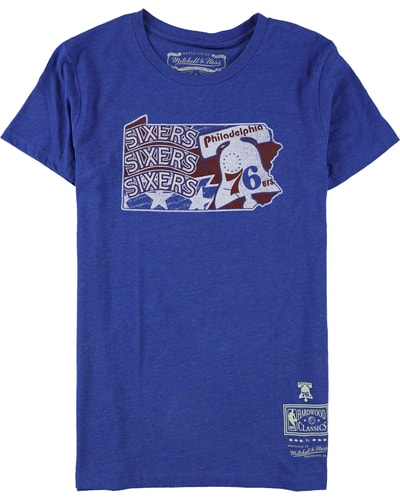
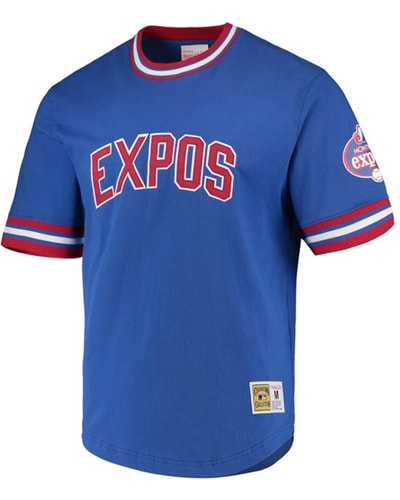
Once a tee carries studs, rhinestones, appliqué, or a large print — like the Mitchell & Ness team tees and embellished styles that rotate through our racks — the base fabric matters twice: it has to feel good and hold the decoration through washing. Cotton and cotton-rich blends take embellishment best, and the care rule is universal: turn it inside out, wash cold, skip the dryer’s high heat. The decoration fails before the fabric does, so care for the decoration.
How To Read The Label In Five Seconds
Fiber content first (the percentages tell you everything above), then knit weight by feel — a substantial hand means structure, a feather-light hand means drape. “Ringspun” and “combed” cotton mean smoother yarn; “heathered” usually signals a blend. If two shirts look identical on the rack, the label is the tiebreaker, and at off-price the label often reads like a shirt three times the price.
Final Thoughts
Cotton for comfort, poly for punishment, blends for everything in between. Put the theory to work in men’s basic tees, men’s graphic tees, and women’s embellished tees at Tags Weekly — off-price finds, name-brand labels.