

Joggers vs sweatpants is one of the most common mix-ups in a guy’s closet, and the two names get used interchangeably more often than they should. Both are relaxed, elastic-waist pants built for comfort, but the fit, cuff, and fabric weight set them apart — and that difference decides whether a pair works for the gym, the couch, or a casual outing.
Joggers are built with a tapered leg and an elastic or ribbed cuff that gathers at the ankle, while sweatpants keep a straighter leg that ends in an open or banded hem. The cuff is the fastest visual cue: a cinched ankle means jogger, a loose hem means sweatpant.
Joggers vs Sweatpants: Definitions at a Glance
Before the side-by-side comparison, here’s what each term actually means and the two features that do the most work to tell them apart.
- Joggers: a tapered pant with an elastic or ribbed cuff at the ankle, usually cut from a lighter knit built for movement.
- Sweatpants: a straight-leg pant in a heavier fleece, finished with an open hem or a wide banded leg instead of a cinched cuff.
- Cuff: the ribbed or elastic band at the ankle opening — present on joggers, absent on classic sweatpants.
- Fleece: the brushed-interior fabric that gives sweatpants their warmth and their looser drape.
Joggers vs Sweatpants: Side-by-Side Comparison
Line the two up feature by feature and the differences stop being subjective.
| Feature | Joggers | Sweatpants |
|---|---|---|
| Fit | Tapered through the leg | Straight through the leg |
| Cuff | Elastic or ribbed, cinched at the ankle | Open hem or a wide banded leg |
| Fabric | Lighter knit or French terry | Heavier fleece |
| Use Case | Workouts, travel days, errands | Lounging, layering, cold-weather comfort |
| Dressiness | Can pass for smart-casual with the right top | Reads as off-duty, best kept casual |
Joggers: Fit, Fabric, and Signature Details
A tapered leg and a cinched cuff are what make a jogger a jogger. That silhouette is what lets a pair move from a workout to running errands without looking like you rolled off the couch — browse men’s joggers for the current lineup. Beyond the cuff, the details below are what separate a basic pair from one you’ll actually reach for.

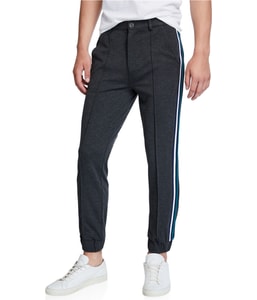
A side stripe down the leg is a quick way to add sport styling without going full athletic-wear. It reads best on a pair with a slim, tapered fit — the stripe follows the leg line instead of sitting loose on excess fabric.

A small logo at the hip or thigh keeps a jogger looking put-together without shouting. Pair a logo jogger with a plain tee and clean sneakers for an outfit that takes zero thought and still looks intentional.

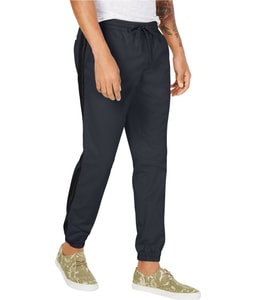
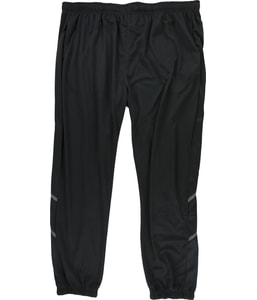
A stretch knit is what makes a jogger comfortable enough for a workout and still presentable after. Look for a fabric with real give at the knee and waistband so the tapered fit doesn’t restrict movement.

A neutral, non-fleece jogger in a matte fabric is the closest thing to a dress pant in this category. It’s the pair to reach for when the plan includes more than the couch or the gym.

Color-blocked panels along the leg are a track-inspired detail that leans into the jogger’s athletic roots. They work best kept to one or two accent colors so the pair still layers under a jacket without clashing.
Sweatpants: Fit, Fabric, and Signature Details
Where joggers taper in, sweatpants stay loose — a straighter leg and a heavier fleece are the two things that define the category, and neither is trying to look athletic. See the full range in men’s sweatpants. The style details below are what separate a basic sweatpant from one worth keeping in rotation.

Deep side pockets are a practical detail that separates a lounge-only sweatpant from one you can actually wear out of the house — enough room for a phone and keys without a bulky pouch pocket up front.

A heavyweight fleece with a brushed interior is the whole point of a winter sweatpant. The thicker the fabric, the more the leg tends to relax into a straight, roomy drape rather than holding any shape.

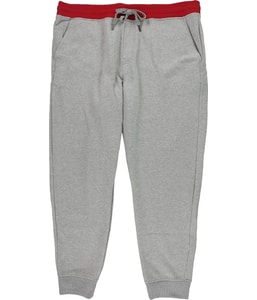
A relaxed, loose-fit leg with an open hem is the classic sweatpant silhouette — no cuff, no taper, just room to move. It’s the version built for the couch, laundry day, or a low-key walk.

A neutral heather grey is the easiest sweatpant to build a whole outfit around. Pair it with a matching hoodie for a set, or break it up with any solid tee for an easy off-duty look.

An inner leg stripe with a brand logo is a subtle nod to the sweatpant’s athletic-wear roots, without going full track-suit. It’s a detail that reads well paired with a plain hoodie or crewneck.

A bold color like red is the easiest way to turn a basic sweatpant into a statement piece. Keep the rest of the outfit neutral — a white or black tee — so the pants stay the focal point.
When to Wear Joggers vs Sweatpants
Once you know the two apart, the harder question is which one fits the moment. Use these as a quick reference:
- Gym or a run: joggers, so the tapered cuff won’t catch on equipment or bunch up under sneakers.
- Lounging at home: sweatpants, for the loosest fit and the warmest fleece.
- Travel day: joggers, since the slimmer leg looks put-together through the airport and layers cleanly under a jacket.
- Cold-weather errands: sweatpants, for the heavier fleece and roomier fit over a base layer.
- Casual Friday or a smart-casual outing: joggers in a matte, non-fleece fabric, paired with a button-up or a clean sneaker.
Joggers vs Sweatpants: Which One Should You Buy?
There’s no wrong answer between joggers and sweatpants — most guys end up owning both once the difference clicks. Joggers earn their spot for anything active or semi-put-together; sweatpants earn theirs for pure comfort. Start with one of each and let the occasion decide which one you reach for. Browse the full men’s pants lineup to build out the rest of the rotation.